
Frisbee Games for PE: 6 Fun Flying Disc Games, Including Ultimate and Disc Golf

Updated: Oct 26
Disc games, often called Frisbee games, are a great way to get students active in physical education while building fitness, hand-eye coordination, and teamwork. They work indoors or outdoors and are fun for students of all ages.

From simple throwing and catching activities to full games, PE teachers have lots of options for bringing flying discs into their classes. Disc activities are fun, and because students have to work together to throw and catch in all kinds of game situations, they also build communication, leadership, and problem solving.
Like any PE activity, disc games take some planning to keep students engaged and safe. In this post, I'll share the benefits of disc games, give you tips for teaching them, and walk you through 6 fun Frisbee games you can use in your next lesson. Are you ready? Let's take this blog for a SPIN!
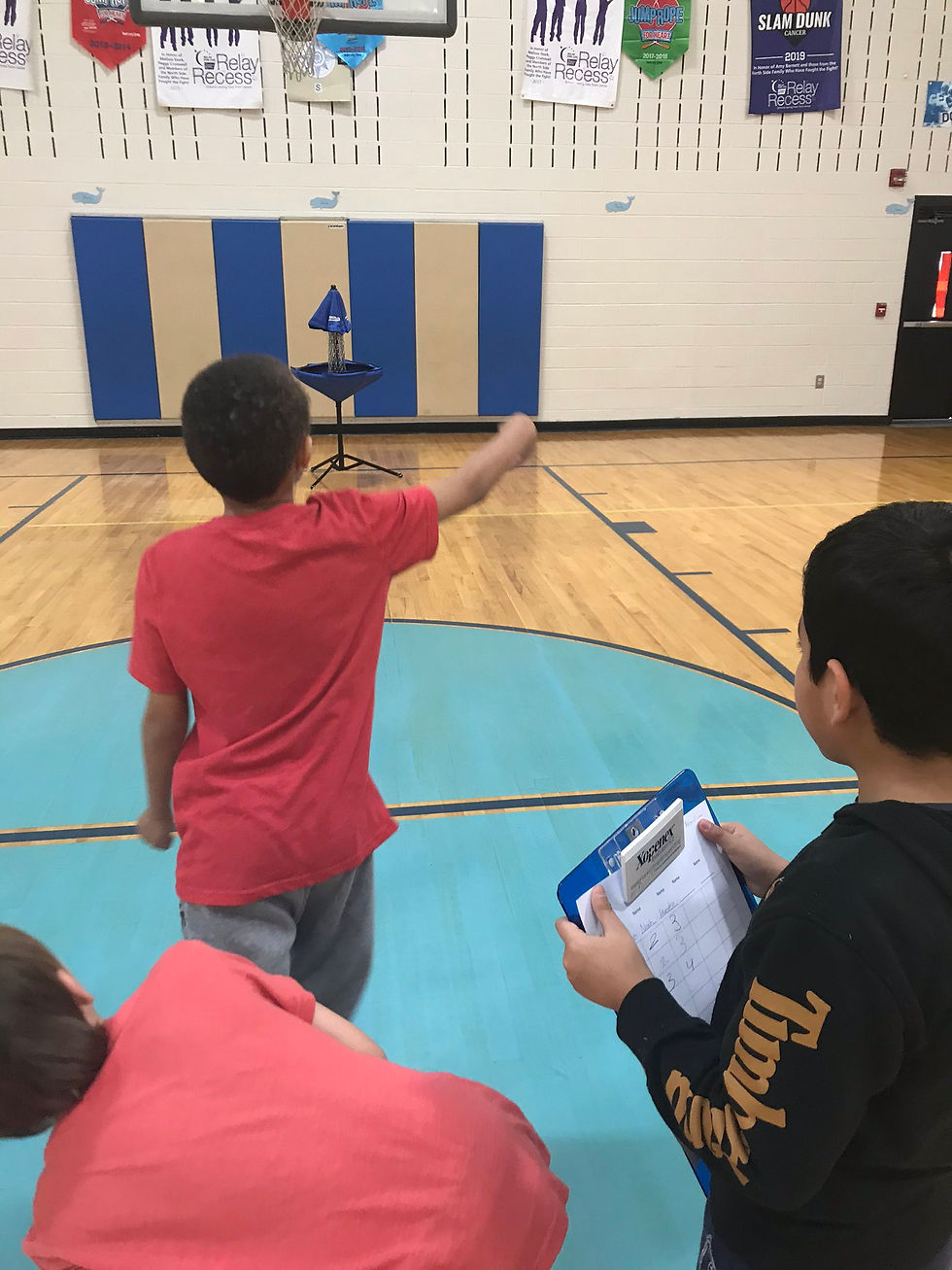
Quick Answer: Fun Frisbee games for PE include Capture the Disc, King/Queen Pin Disc Style, Disc Catch Relay, Disc Cross, Disc Golf, and Ultimate Frisbee. Start by teaching throwing, catching, and pivoting, then move into games that build hand-eye coordination, cardio, teamwork, and strategy.
Quick Section Links
Click any of the links below to jump to a section of this article:
Benefits of Frisbee Games in PE
Disc activities and games offer lots of benefits for students. Here are a few of the biggest:
1. Improves Hand-Eye Coordination: Throwing and catching a disc takes precise hand-eye coordination, and regular practice helps it grow.
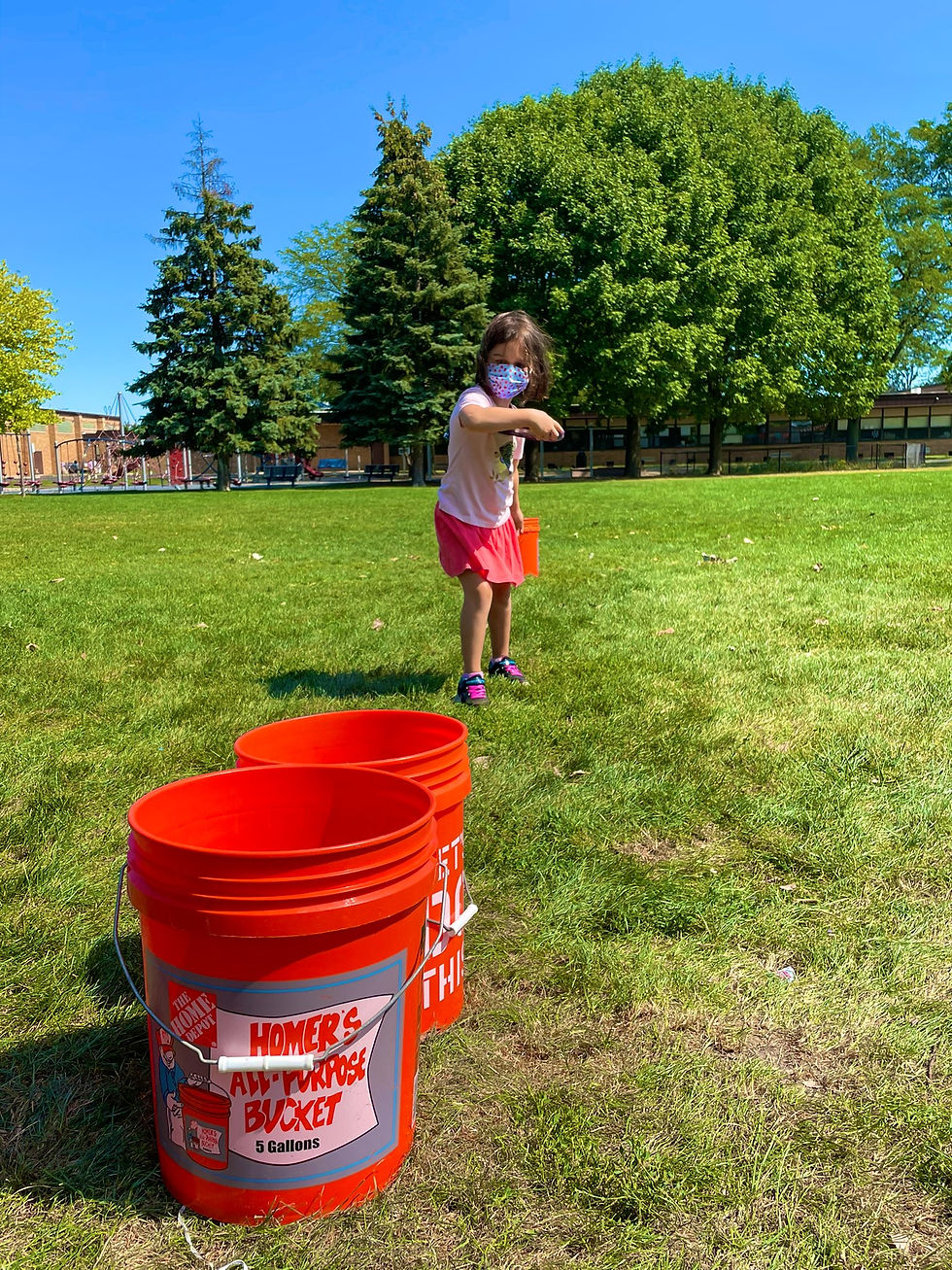
Pic by Middleton Physical Education @DMcWherterPE
2. Builds Cardiovascular Endurance: Many Frisbee games keep students running and moving quickly, which builds cardiovascular endurance over time.
3. Includes Everyone: Students of all abilities and fitness levels can take part in disc activities.
4. Builds Teamwork and Social Skills: Team disc games help students learn to work together and build important social skills.

Pic by Aandrea Haefele @andreahaefele
5. Improves Focus: Students have to watch their surroundings and track the disc, which builds focus and concentration.
6. Makes PE Fun: Disc games are fun for every age, so they're a great way to get students excited about PE.
The PE Frisbee games in this post line up with SHAPE America's Standard 1: Develops a variety of motor skills.* As students use strategy in games like Ultimate and Disc Cross, they also work on Standard 2: Applies knowledge related to movement and fitness concepts.*
*National Physical Education Standards are used under license from SHAPE America. © 2024, SHAPE America, https://www.shapeamerica.org/. All rights reserved.

Tips for Teaching Frisbee Games in PE
Frisbee games are a great way to get students active and help them build important skills. Here are some tips for adding them to your PE program:
Start With the Basics: Teach the basic skills of throwing, catching, and pivoting first. Demonstrate good technique and give students plenty of practice before moving on to games.
Pick the Right Games: Choose games that fit your students' ages and skill levels. Younger students do best with simple partner tossing and catching, while older students can handle Ultimate or Disc Golf.
Video by The PE Thinker @thepethinker
Focus on Teamwork: Have students play in pairs or teams so they learn to work together, communicate, and lead.
Safety First: Make sure the playing area is clear of hazards, and teach students never to throw a disc toward anyone's face.
Set Clear Rules and Boundaries: Go over the playing area, scoring rules, and what happens when rules are broken before the game starts.

Pic by Nick Spencer @PE4Life_Spencer
Encourage Sportsmanship: Disc games depend on teamwork and communication, so encourage students to support each other. Talk about good sportsmanship and positive attitudes.
Connect to Other Subjects: Disc games tie in nicely with other subjects. For example, students can measure and compare their throwing distances in math, or talk about why a disc flies in science.
Mix It Up: Change up the games to keep things fresh. One day could be Disc Golf, and another could be Ultimate.
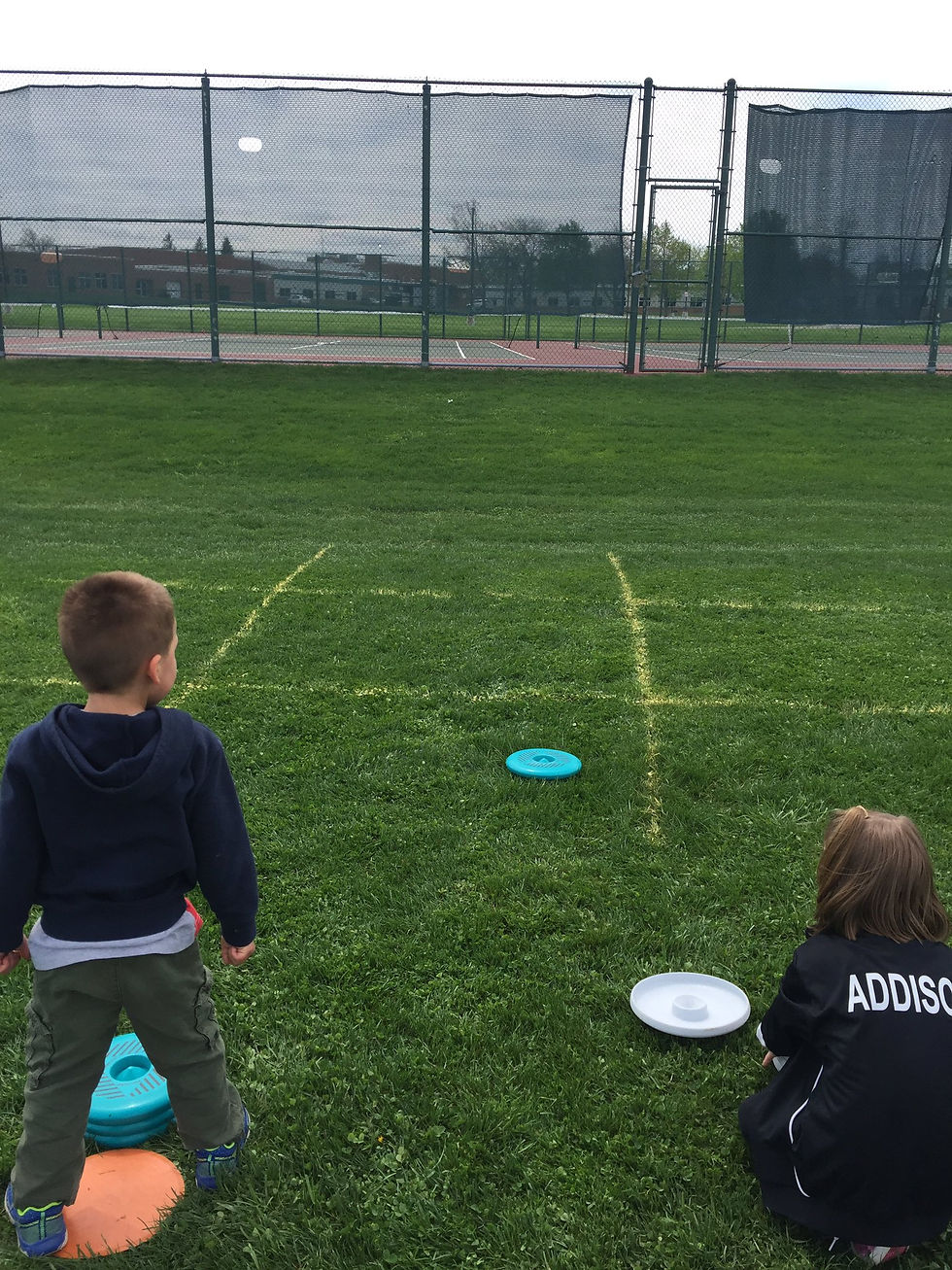
Reflect: After a game, ask students what they liked and didn't like, and use their ideas to make the next game even better.
Follow these tips, and your students will have a great experience with disc games.
6 Frisbee Games for PE
Now that you know how to set up disc games in PE, here are 6 fun Frisbee games to use in your classes:
1. Capture the Disc
Overview
Teams work together to capture discs from the other teams' hula hoops and carry them back across the line into their own zone and hoop.
Skill Focus: throwing, catching, dodging, agility, speed, defense, and strategy
Equipment
Pinnies for 4 teams
A large gym or field with lines for boundaries
Cones to mark boundaries
4 hula hoops and 4 different colored discs (4 of each)

Game Instructions and Rules
Divide the playing area into 4 equal sections. Four teams of 8 to 10 players put on pinnies. Place a hula hoop at the back corner of each section and put that team's discs inside it.
Players go into another team's zone and try to take a disc from that team's hula hoop.
A player who takes a disc tries to get it back to their own zone (and hoop) by running it across a boundary line, or by throwing it to a teammate in the same zone who then runs it across.
Discs can't be thrown over any inside or outside line. They must be carried across.
A player without a disc can be tagged in another team's zone. If tagged, they sit or kneel until a teammate frees them with a high five. The same goes for a player who drops a pass.
A player tagged with a disc gives up the disc and sits or kneels to wait for a high five.
Defenders must stay at least 10 feet away from their own hula hoop.
Players are safe in their own zone and with 1 foot in any other team's hula hoop.
The team with the most discs at the end of the set time wins.
2. King/Queen Pin: Disc Style
Game idea from Gabe Ervin
Overview
Players try to knock over the pins guarded by the Kings and Queens in the center of the court. A successful hit makes you the new King or Queen!
Skill Focus: throwing, catching, accuracy, agility, and blocking
Equipment
Bowling pins for the Kings and Queens to protect
Several indoor foam discs
Lines or cones for court boundaries

Game Instructions and Rules
10 to 15 Kings and Queens stand by a pin on the center line of the gym. Everyone else spreads out on the sidelines.
On the teacher's signal, players try to knock over the Kings' and Queens' pins.
Players can pick up a disc anywhere, but must be touching the sideline when they throw it at a pin.
When a pin gets knocked over, that King or Queen leaves their post and goes to a sideline or end line to try to knock down another pin.
The player who knocked down the pin runs to the center, stands the pin back up, and becomes the new King or Queen.
If you knock down your own pin by accident, leave your post and ask someone to take your spot.
Kings and Queens can't touch their pin. They can only block discs. If the pin starts to fall, they have to let it fall.
Players can get discs from in front of or behind their sideline, but must throw or roll from the line, no closer.
From My PE Classes
King/Queen Pin: Disc Style was a favorite in my gym. We played with foam frisbees and big, oversized bowling pins, and that combination worked great. Students loved it from both sides, whether they were blocking discs to protect their pins or trying to knock someone else's pin over. Our games lasted a long time because nobody wanted to stop.
3. Disc Catch Relay
Overview
Teams of throwers and catchers earn points by completing throws to catching zones at different distances.
Skill Focus: throwing, catching, accuracy, tracking, and speed
Equipment
1 flying disc per team of 5 or 6 students (different colors are best)
A large field or gym
Several cones (or existing lines) to mark the catching zones

Game Instructions and Rules
Make teams of about 5 or 6. Teams line up behind cones a few feet behind the throw line. Mark 3 catching zones (with cones or existing lines) at different distances from the throw line and give each zone a point value.
Once teams are lined up, 1 thrower and 1 catcher from each team move into position.
The thrower and catcher quickly decide which zone (and point value) to go for.
They try to complete a catch for points: Catching Zone 1 is 5 points, Catching Zone 2 is 10 points, and Catching Zone 3 is 20 points.
If the disc hits the ground or the catcher drops it, no points are earned.
The catcher runs the disc back to the line and goes to the back, the thrower becomes the next catcher, and the next player in line throws.
Play for a set time. Students keep honest scores and can call out their team totals as they go.
4. Disc Cross
Overview
Teams try to get as many flying discs as they can into the other team's score zones without getting tagged in the other team's home zone.
Skill Focus: throwing, catching, dodging, tagging, teamwork, and cardio
Equipment
4 to 8 flying discs per playing group
16 large cones to make the 4 score zones (2 zones at each end)
Cones or lines for boundaries

Game Instructions and Rules
Play in groups of 10 to 12 (5 vs. 5 or 6 vs. 6), split into 2 even teams. Set cones to make a large court with a center line, and make 2 large score zones in the back corners of each team's home zone, about 60 to 80 feet apart.
Players can cross the midline with a disc and try to throw or place it in the other team's score zone from anywhere in that team's home zone.
A player tagged in the other team's home zone gives the disc to an opposing player and goes back to their own home zone.
A player about to be tagged can throw the disc back across the midline to a teammate and then try again. If the teammate drops it or already has a disc, the disc goes to the other team.
Players in the other team's home zone can throw at a score zone from anywhere (closer is better). If the throw misses and hits the ground, the disc goes to the other team.
5. Disc Golf
Overview
In groups of 2 or 4, students travel around a field playing disc golf and try to land their disc in each of the 9 to 18 holes (hula hoops or small kiddie pools).
Skill Focus: throwing, accuracy, walking, and sportsmanship
Equipment
2 flying discs per group (1 for each pair)
9 to 18 hula hoops or kiddie pools (targets for each hole)
9 to 18 cones (for tees)
9 to 18 number markers (taped on cones)

Game Instructions and Rules
Play in groups of 4, in teams of 2 vs. 2. Set 9 to 18 hula hoops (holes) around a large playing area or field, and mark each hole with a numbered cone if you can. Start each group at a different hole (for example, hole 5) so the whole class is spread out. Hand out scorecards before the activity if you'd like.
Pair students, put pairs into foursomes, and send each group to a starting hole.
Partners take turns throwing from the cone at the previous hole toward the next numbered hoop. For example, students throwing toward hole 6 start at the cone beside hole 5.
The cones from the previous hole work as tees for the next one, so you don't need extra equipment. You can also set up separate tee lines.
The pair farthest from the hole throws first. Each throw is taken from where the disc stopped.
Partners help each other keep score on a scorecard.
Younger students (K and 1st grade) can play with a tennis ball until their disc throwing skills develop.
Video by Montgomery PE @PeMontgomery
6. Ultimate Frisbee
Overview
Teams throw and catch a Frisbee down a court or field and score by catching it in the other team's end zone.
Skill Focus: throwing, catching, agility, speed, defense, and strategy
Equipment
1 to 3 flying discs per game
A large field or 2 gym courts for more than one game
Pinnies for each team
Gym or field lines for boundaries
Cones to mark boundaries

Game Instructions and Rules
Two teams of 5 to 10 players put on pinnies. Regulation Ultimate is 7 vs. 7, but you can adjust for your space and class size. Teams can sub in after goals if needed. Each game starts with both teams on their goal lines facing each other.
On a signal, one team starts with a throw-off from its goal line, called a pull.
Teams pass and catch the disc down the court or field. A catch in the other team's end zone scores a point.
After each goal, the team that scored stays in that end zone, pulls to the other team, and plays defense.
Teams switch directions after each point.
The defense gets the disc if a pass is dropped, caught out of bounds, intercepted, or knocked down.
Players can't run with the disc. After catching it, they stop as quickly as they can and keep 1 foot planted as a pivot.
The thrower has 10 seconds to throw. Defenders can't touch the thrower, and only 1 defender can guard the thrower at a time.
For more disc games like these, check out my PE Disc Games: 25 Spin-tastic Flying Disc Activities on TPT.
Final Thoughts
Frisbee games are a fun way to add quality physical activity to your PE program. From throwing and catching to tracking and dodging, they build lots of different skills, along with hand-eye coordination, cardiovascular endurance, and teamwork. With indoor and outdoor discs, hula hoops, poly spots, and cones, it's easy to set up a game that gets students working together and building their own strategies.
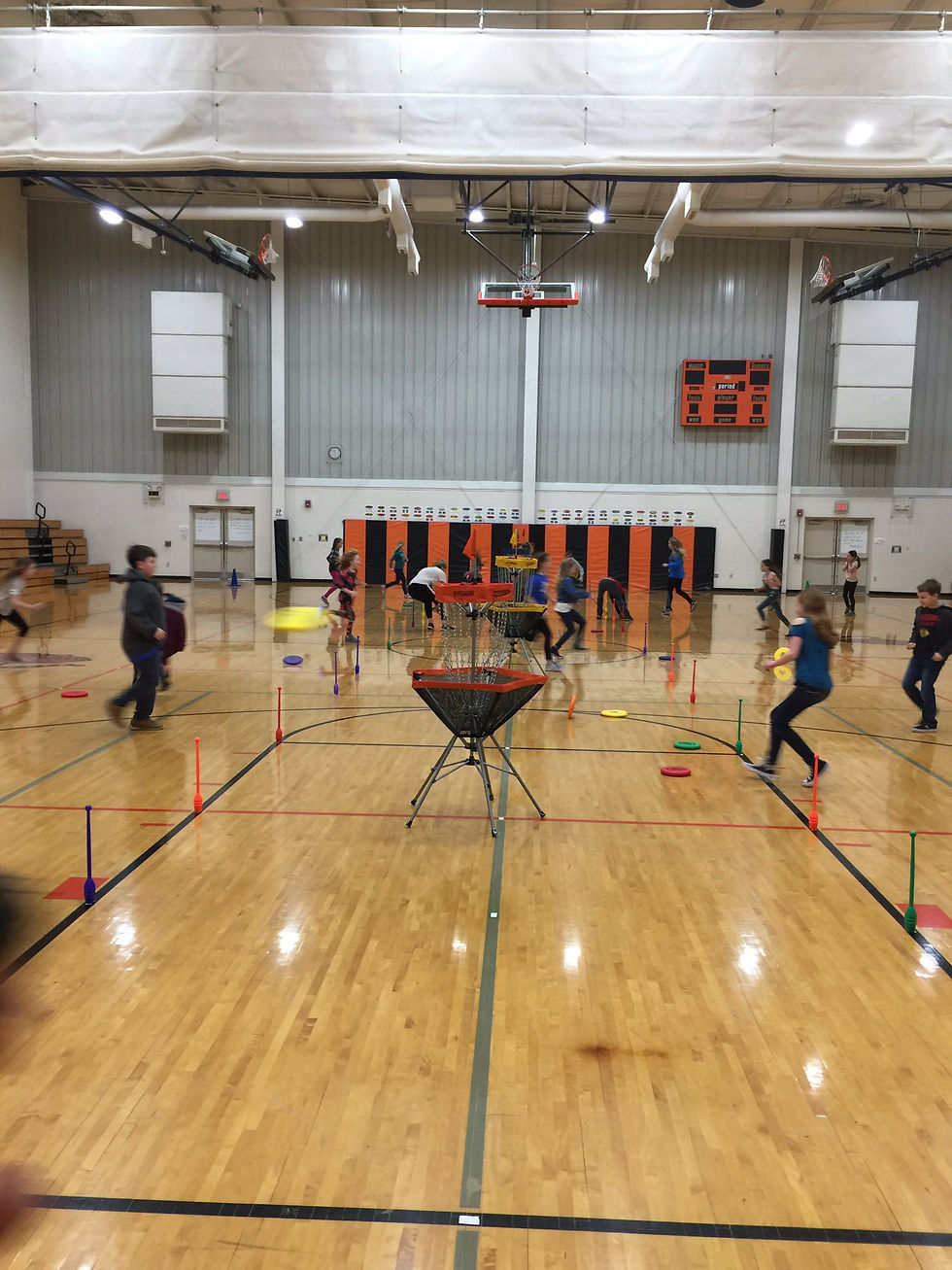
Pic by Mr. Bricker @IBES_PE
There are lots of other disc games to try, too, like Frisbee tennis, Frisbee baseball, and Frisbee bowling. Don't be afraid to mix games together, add your own twist, and try new strategies that build physical literacy and motor skills.
If you'd like a ready-to-go plan, my Frisbee Skills and Games Unit and Throwing a Flying Disc Unit each include K-5 lesson plans, and my Frisbee PE Bundle puts them together. My Throwing a Frisbee Rubrics and Catching a Frisbee Rubrics make assessment simple, and my Ultimate Frisbee Word Wall is great for teaching the terms. For more ideas, check out my posts on throwing stations, football stations, and 6 large group games.
Good luck and keep it FUN!
Need Some FREE Physical Education Games?
Do you need fun games for your PE program with clear instructions and play diagrams? Here's a free set to help!

Fill in the form below to download the FREE Physical Education Games Packet: 18 Game Set to use in your PE program! Inside are 18 fun and exciting PE games for a wide range of ages.
This PDF digital download includes 3 games from each of these sets in my PE Games Super Bundle:
1. PE Base Games, 2. PE Basketball Games, 3. PE Soccer Games, 4. PE Volleyball and Net Games, 5. PE Disc Games, and 6. PE Small Group Multi-Skill Games
More Games
If you're looking for lots of PE games for large, medium, or small groups, check out my PE Games Super Bundle: Basketball, Soccer, Net, Disc, Base, and Small Group Games.

This Super Bundle includes 150 games from 6 PE game sets: PE Base Games, PE Basketball Games, PE Soccer Games, PE Volleyball and Net Games, PE Disc Games, and PE Small Group Multi-Skill Games. Each set has 25 top-rated games that PE and classroom teachers can use to teach skills and keep students happy and active!
You can find this bundle in my TPT store: PE Games for Team Sports: Super Bundle of Large Group and Small Group Activities

About Pete Charrette
Pete Charrette is a National Board Certified physical education teacher and former Georgia PE Teacher of the Year with more than 30 years of experience teaching elementary PE. He is the creator of Cap'n Pete's Power PE and has developed more than 1,000 PE and health resources used by teachers around the world. Pete loves helping PE teachers build programs their students enjoy.


