
6 Large Group PE Games Your Students Will Love: Battleship, Storm the Castle, and More

Updated: Apr 19
If you've ever watched a gym full of students completely lock in on a game — moving with purpose, communicating with teammates, and genuinely not wanting the period to end — you already know the power of a well-designed PE game. Games are where all the skills students practice in isolation finally come together in a real, meaningful context. Throwing, catching, dodging, strategy, teamwork — it all shows up at once, and students don't even realize how much they're learning because they're having too much fun.

That's exactly what the six large group PE games in this article are designed to do. Each one takes fundamental movement skills and puts them inside an engaging, themed format that keeps every student active and involved from start to finish. These aren't just fun activities for the sake of fun. They're purposeful, well-structured games that align with the 2024 SHAPE America National Physical Education Standards and give you a legitimate way to develop physically literate students who can apply what they've learned across a wide range of situations.
Whether you teach elementary or middle school, these games work. They're adaptable, they scale to different skill levels, and they tend to become instant favorites the moment students play them for the first time. Let's take a look at what each one brings to your program.
Click any of the links below to jump to a section of this article:
Benefits of Incorporating PE Games into the Curriculum
There's a reason games are such a central part of quality physical education programs. When they're designed well, PE games do something that drills and isolated skill practice simply can't — they put students in situations where they have to think, adapt, and apply what they've learned in real time. The benefits go well beyond physical development too. Here's a closer look at what well-designed large group PE games bring to your curriculum.

Engaging Students in Active Learning
Good PE games pull students in from the moment the rules are explained. When students are genuinely engaged, motor skill development happens naturally and enthusiastically. The 2024 SHAPE America standards speak directly to this:
Fostering Motor Skill Development (SHAPE America Standard 1: Develops a Variety of Motor Skills)

Variety of Movement Patterns: Large group PE games expose students to a wide range of movements — throwing, catching, rolling, dodging, blocking — giving them repeated opportunities to build a solid motor skill foundation in a context that feels purposeful rather than repetitive. This directly supports Standard 1, which emphasizes that motor skills are a foundational part of child development and support the movements of everyday life.
Skill Development Through Play: When students practice skills inside a game, they're not just going through the motions. They're refining those skills under real conditions, with real consequences, which accelerates learning and moves students forward on their physical literacy journey.
Application of Movement Knowledge (SHAPE America Standard 2: Applies Knowledge Related to Movement and Fitness Concepts)

Strategic Thinking and Decision Making: Great PE games require students to make quick decisions — where to move, when to throw, how to protect their team's target. That kind of in-the-moment thinking reflects Standard 2's emphasis on applying knowledge of movement concepts, tactics, and strategies across a variety of environments.
Real-World Skill Application: Through large group game formats, students learn to apply movement principles and strategies cooperatively and competitively, building skills that transfer to sports, recreation, and physical activity outside of school — which is exactly what Standard 2 is designed to develop.
Promoting Physical Fitness and Well-being
When physical activity is genuinely enjoyable, students want more of it. That's one of the most powerful things large group PE games can do — build a positive association with movement that extends well beyond your class period.

Regular Engagement: Well-run PE games keep students moving for the vast majority of class time. When students are having fun, they're also developing the personal connection to physical activity that Standard 4 is built around — the idea that movement is personally meaningful and worth choosing.
Health-Enhancing Fitness: These games naturally develop cardiovascular endurance, muscular strength, agility, and coordination — all within a format students find exciting rather than tedious. When kids don't notice they're working hard, that's a sign the game is doing its job. And when they leave class wanting to play again, that's Standard 4 in action.
When large group PE games are aligned with the 2024 SHAPE America National Physical Education Standards, they become more than just fun activities. They become intentional learning experiences that develop motor skills, build movement knowledge, foster social skills, and help students discover a personal connection to physical activity that lasts well beyond your class. That's a lot of return on a single well-designed game.
The Role of PE Games in Promoting Social and Personal Responsibility
Physical education games do something that very few other learning environments can replicate. They put students in real social situations, with real stakes, real teammates, and real opponents, and ask them to navigate all of it while staying active and engaged. That combination is incredibly powerful for developing the kind of social and personal responsibility skills that matter well beyond the gym.
Cultivating Responsible Behavior and Respect
Large group PE games are a natural setting for teaching students how to interact respectfully and take responsibility for their role in a group. When the game depends on everyone doing their part, personal accountability stops being an abstract concept and becomes something students feel firsthand.
Developing Social Skills Through Movement (SHAPE America Standard 3: Develops Social Skills Through Movement)
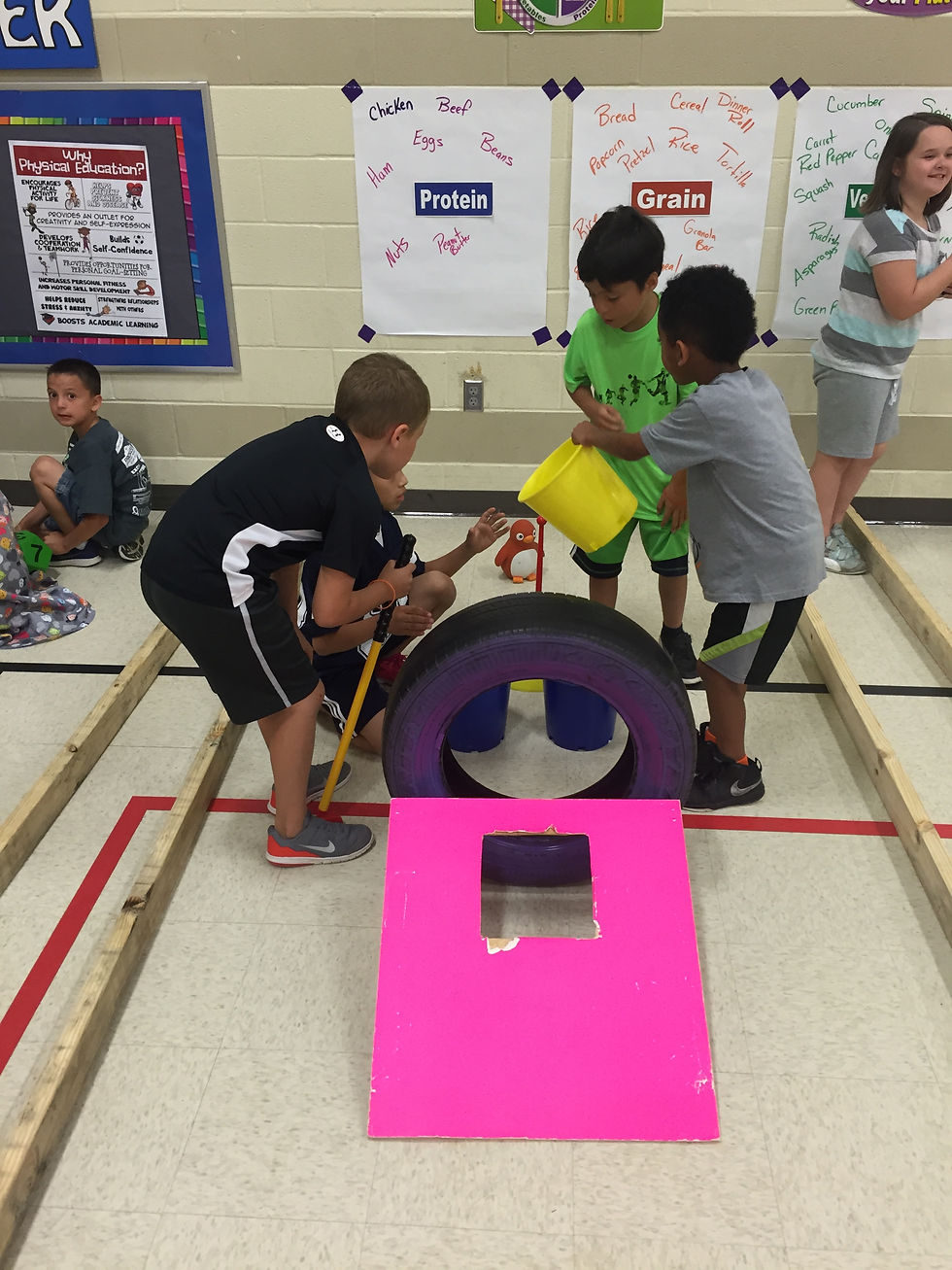
Teamwork and Communication: Every game in this collection requires students to communicate, coordinate, and support each other in real time. Standard 3 emphasizes that physical education should develop the social skills necessary to foster and maintain relationships. Large group games create exactly those opportunities, naturally and repeatedly throughout every class period.
Respect for Others: Games that involve diverse teams and rotating roles give students regular practice in accepting differences, following rules, and solving problems with teammates and opponents. These aren't lessons that need to be paused and taught separately. They emerge organically from the game itself, which is what makes them so effective.
Highlighting the Value of Physical Activity
When students experience a game that genuinely excites them, something important happens. They stop thinking of physical activity as something they have to do and start seeing it as something they want to do. That shift is one of the most valuable outcomes a PE teacher can achieve.
Developing Personal Skills and Choosing to Engage (SHAPE America Standard 4: Develops Personal Skills, Identifies Personal Benefits of Movement, and Chooses to Engage in Physical Activity)

Personal Connection to Movement: Standard 4 is built around the idea that students should develop a genuine, personal relationship with physical activity. Large group PE games, especially ones with creative themes and built-in social interaction, are one of the most effective tools for building that connection. When a student leaves class still talking about the game, that's Standard 4 doing its job.
Self-Expression and Challenge: Games like Battleship, Storm the Castle, and Meteor Blitz give students a platform for challenge, self-expression, and genuine enjoyment. They also create natural opportunities for students to reflect on what they value about movement, which is exactly the kind of personal development Standard 4 is designed to foster.
When large group PE games are designed with the 2024 SHAPE America standards in mind, they become more than just engaging activities. They become opportunities to develop responsible, socially aware, physically active individuals who understand the value of movement in their own lives. That's the kind of physical education experience worth building a program around.
Featured PE Games
The six large group PE games featured below each bring something unique to your program. They cover a range of themes, skill sets, and objectives, but they all share the same core purpose: getting students genuinely engaged while developing the movement knowledge, strategic thinking, and teamwork skills that quality physical education is built around. Each game aligns naturally with SHAPE America Standard 2, which calls on students to apply knowledge related to movement and fitness concepts across a variety of environments. In other words, these aren't just fun games. They're learning experiences your students will actually look forward to.

Battleship
Game Overview

Battleship is one of those games that students talk about for days after they play it. Set in a naval-themed arena, this large group PE game challenges students to collaborate and think strategically as they work to "sink" opposing teams' battleships by knocking over their pins. It's a fantastic vehicle for developing throwing, rolling, and blocking skills in a context that feels genuinely exciting from the first whistle to the last.
Equipment Needed
8 – 12 mats (representing battleships)
6 pins per battleship
Velcro tape or other markers for pin placement
8-12 flags or flagpoles (one for each battleship)
Matching scrimmage vests for scuba divers
20-30 gatorskin balls
20-30 yarn balls
Game Setup
Transform your gym into a naval battlefield with battleships stationed around the perimeter. Each battleship is represented by a mat, with six pins set around it as targets and a flag at the front to mark the ship's presence. Distribute balls around the gym floor as ammunition. Assign 4 to 8 students to each battleship, and designate one student from each team as the "scuba diver," identified by a vest matching their team's flag color. The scuba diver operates off the mat to gather balls and return them to their team.

Rules and Gameplay
The objective is for teams to sink opposing battleships by knocking over their pins using balls.
When all of a team's pins are down, that battleship is considered sunk and they must lower their flag.
Even after being sunk, teams can continue playing and aim to sink the remaining battleships.
Players must stay on their mat and cover their battleship effectively.
Each team's scuba diver collects balls from the gym floor and distributes them to teammates, but cannot block shots. Each ball must be rolled quickly to a teammate like a hot potato.
Scuba divers can gather multiple balls at a time but must avoid interfering with gameplay.
Players on the battleships must not step off the mat. Doing so may result in a penalty such as knocking down one of their own pins.
The game concludes when only one battleship remains standing, or when the team with the most pins still up wins after a predetermined time. Reset the pins after each round and keep playing.
Teaching Tips
Differentiation and Modification: Use taped-off areas or cones to define battleships for easier setup. Adjust the type and size of balls to modify difficulty. Change the number of pins required to sink a battleship based on skill levels, and vary the number of scuba divers based on team size.
Safety: Encourage players to stay on their mats to prevent falls. Scuba divers should stay aware of their surroundings to avoid collisions with players or obstacles.
Assessment: Observe students' throwing, rolling, and blocking technique. Watch for teamwork and strategic planning, and ensure students are following the rules and demonstrating fair play throughout.
You can find the full Battleship game plan on TPT.
Storm the Castle
Game Overview

Storm the Castle is a medieval-themed large group tag game that never fails to bring out the best in a class. Students are divided into two teams of knights, each defending their castle and its treasures while trying to invade the opposing team's fortress and steal theirs. It combines dodging, fleeing, chasing, and tagging in a format that rewards both speed and strategy. Use music to start and stop the game and for transitions between rounds.
Equipment Needed
8-, 18-, or 24-inch cones for treasures.
Small saucer cones for dungeons.
16 Poly Spot Markers.
2 sets of different colored vests for teams.
Boundary lines to define the playing area.
Game Setup
Divide the class into two teams, each occupying one side of the play area representing their castle. At the rear of each castle, place four cones on four of the eight spot markers to serve as treasures. The play area is divided into two sections, with two gates positioned at opposite ends of each castle and two dungeons on opposite sides. This layout adds layers of strategic depth that students figure out quickly and love to exploit.

Rules and Gameplay
Knights start in their castle and the game begins on the teacher's signal.
The objective is for knights to cross into the opposing team's castle, avoid being tagged, and bring treasures back to their side. The first team to secure all 8 treasures wins.
Knights prevent opponents from stealing their treasures by tagging them before they can grab a cone. No diving, sliding, or blob tagging allowed.
Tagged knights are sent to the dungeon and can be freed by a teammate who reaches them without being tagged.
Freed knights must link with their rescuer and walk safely back to their castle together.
Knights carrying a stolen treasure must walk with it held above their head to show it was legally taken. They are immune to being tagged while doing so.
Up to 4 guards per team can protect the treasures at any time.
Referees or rock-paper-scissors can be used to resolve disputes or close calls.
Teaching Tips
Differentiation and Modification: Adjust the length of the court or field to fit your available space. Playing outdoors is a great option when the weather cooperates. Vary the number of treasure cones to modify difficulty, and adjust the number of guards per team to allow for different strategic approaches.
Safety: Diving and sliding to retrieve cones is strictly off limits to minimize injury risk. Remind students to stay in control of their movements at all times, watch for open spaces, and maintain a safe distance from walls and other obstacles. The excitement of the game can ramp up quickly, so setting clear safety expectations before play begins is essential.
Assessment: Observe students' technique in chasing, dodging, tagging, and fleeing. Look for rule adherence, teamwork, and cooperative strategy as key indicators of understanding and engagement.
You can find the full Storm the Castle game plan on TPT.
King/Queen Pin
Game Overview

King/Queen Pin was created by accomplished physical educator Gabe Erbin (@ErvinGabe) from North Carolina, and it's a gem. Students take on roles as either noble guardians (kings and queens) defending their kingdom's treasures, or as rebellious contenders (peasants) trying to knock down the monarch's pin. It's a wonderfully simple concept that generates a surprising amount of strategic thinking, competitive energy, and genuine fun. Throwing, rolling, catching, and blocking are all in play from the moment the game starts.
Equipment Needed
10 – 15 bowling pins
Several Nerf, Gator skin, or yarn balls
16 Poly Spot Markers
Boundary lines
Game Setup
Picture the playing area as a royal court. Kings and queens are positioned centrally, each assigned to guard a bowling pin placed at the heart of the play zone. The remaining students take on the role of peasants and line up behind the court's sideline, ready to challenge the monarchs. Soft balls are scattered across the field as ammunition for the peasants to use in their attempts to dethrone the reigning kings and queens.

Instructions for Play
Divide students into two groups: King/Queen Pins (defenders) and peasant throwers and rollers (attackers).
The goal for attackers is to knock down the King/Queen Pin's bowling pin by throwing or rolling balls.
All throws and rolls must be executed with at least one foot on the peasant line.
Balls can be retrieved from anywhere on the court but must be launched from the peasant line.
Successfully knocking down a pin allows the peasant to dethrone the King/Queen Pin and take their place in the center.
Kings and queens defend by blocking balls with any part of their body, without directly supporting the pin to prevent it from falling.
The goal for King/Queen Pins is to hold their position by defending effectively against the attackers.
Teaching Tips
Differentiation and Modification: Try substituting balls with indoor foam Frisbees for an added challenge. Adjust the number of pins in play to accommodate the size of the group or to change the level of difficulty. The beauty of this game is how easily it scales to different ages and skill levels with just a few small tweaks.
Safety: Use soft balls only. All throws must be made from behind the designated sideline to maintain order and fairness. Players should stay aware of their surroundings to prevent collisions and avoid diving or sliding for balls. All throws should be aimed at the pins, not at other players.
Assessment: Focus on observing students' technique in throwing, rolling, catching, and blocking. Evaluate rule adherence, teamwork, and strategic execution to assess engagement and understanding of the game's objectives.
Sky Bowling
Game Overview

Sky Bowling is one of those games that takes a familiar concept and turns it into something completely fresh. The gym is transformed into a competitive sky, with upright mats forming a "Wall Cloud" barrier that divides the two teams. The objective is to throw balls over the cloud and knock over the opposing team's hidden pins while protecting your own. Throwing, catching, blocking, and gathering skills are all in play, and the strategic element of not being able to see what's happening on the other side adds a layer of excitement that keeps students locked in from start to finish.
Equipment Needed
8-10 mats placed upright to form a "Sky Cloud" barrier
15-20 nerf, gator skin, or fleece balls for throwing
24-30 hula hoops scattered across each side
24-30 bowling pins or cones with whiffle balls on top, positioned within the hula hoops
A scoreboard or alternative scoring device
Game Setup
Split the gym into two halves using 8 to 10 upright mats linked together in the center to form the Wall Cloud divider. On each side, place 12 to 20 hula hoops around the playing area, each containing a bowling pin or a cone topped with a whiffle ball. Players spread out across their half, ready to throw balls over the cloud and defend their pins. Basketball goals on the wall serve as an additional scoring opportunity for players who catch a ball cleanly.

Instructions for Play
Players divide into two teams and take positions within their designated Sky Bowling court.
On the start signal, players collect balls from their side and throw them over the Wall Cloud toward the opposing team's pins.
Each player can only throw one ball at a time and must release it within three seconds of picking it up.
Throws must be made from the spot where the ball was picked up or stopped, with only a single step allowed for momentum.
Catching a ball cleanly earns the player a chance to shoot a basket. A successful basket allows that player to reset one of their team's knocked-down pins.
Only players who score a basket can reset pins.
The match ends after a predetermined time. The team with the fewest pins knocked down wins.
Teaching Tips
Differentiation and Modification: Lower the mats or use a volleyball net instead of the Wall Cloud for better visibility. Introduce beach balls for a slower, more accessible gameplay option. Adjust the size of the playing court or use floor lines as dividers to suit your available space and the skill level of your students.
Safety: Use soft gator skin or fleece balls only to keep the game safe for everyone. Players should stay aware of their surroundings to avoid collisions, and gathering balls should always be done carefully. Discourage contact with the dividing mats to prevent them from toppling over during play.
Assessment: Observe students' proficiency in throwing, catching, and shooting. Look for rule adherence, fair play, and the ability to collaborate effectively within teams as key indicators of understanding and engagement.
You can find the full Sky Bowling game plan on TPT.
Stars and Strikes
Game Overview

Stars and Strikes takes the energy of a large group throwing and rolling game and wraps it inside a space-themed adventure that students absolutely love. The gym becomes two rival planets, with students taking on the roles of Star Troopers defending their planet's command centers (bowling pins) while trying to knock down the opposing team's. Two "Friendly Aliens" on each team assist with defense and ammunition supply, adding a role-based element that keeps everyone actively involved throughout the game.
Equipment Needed
10 bowling pins set up on polyspots or tape dots behind each team's territory
25+ yarn, nerf, or fleece balls scattered across the play area for use as ammunition
2 red vests and 2 blue vests for the "Aliens" role
Center line to divide the gym into two halves, representing different planets
Game Setup
Divide the gym into two halves representing different planets. Each side has 10 bowling pins arranged behind the back line, serving as the planet's command centers. Scatter yarn and Nerf balls across the play area as ammunition for the Star Troopers. Assign two students on each team to wear vests and take on the Friendly Alien role — they operate behind the bowling pin line, protecting the pins and redistributing balls to their teammates.

Instructions for Play
Players divide into two teams, each defending their planet's command centers while trying to knock down the opposing team's pins.
Crossing the center line is not allowed at any time.
Star Troopers can throw or roll only one ball at a time toward the opposing team's pins.
Friendly Aliens are the only players permitted behind the bowling pin line. Their job is to protect the pins and get balls back to their teammates.
The game ends when one team knocks down all of the opponent's pins, or when the team with the most pins still standing wins after a set time limit.
Teaching Tips
Differentiation and Modification: Use only fleece balls for younger or less experienced players to make throwing safer and more manageable. Adjust the number of pins or change the distance between them to modify the difficulty level. Bringing pins closer together makes the game more accessible for younger students who are still developing their throwing accuracy.
Safety: Emphasize the use of soft fleece and yarn balls throughout. Players should stay aware of their surroundings to avoid collisions and should never dive or slide for balls. All throws should be directed toward the pins, not at other players, to keep the environment safe and controlled.
Assessment: Observe students' ability to apply proper throwing, rolling, catching, and blocking techniques. Look for rule adherence, cooperative teamwork, and strategic planning as indicators of each student's understanding and engagement with the game's objectives.
You can find the full Stars and Strikes game plan on TPT.
Meteor Blitz
Game Overview

Meteor Blitz is a cosmic large group game that puts precision throwing and rolling front and center. The concept is simple and brilliantly engaging: students use smaller balls (meteors) to hit large balls (planets) and drive them across the opposing team's back line to score points. The combination of teamwork, strategy, and the sheer unpredictability of where those big balls will roll makes this one of the most exciting games in the collection. Once students play it, they ask for it again.
Equipment Needed
20-40 gator skin, nerf, or yarn balls as meteors
3-6 Large balls like exercise, beach, or slo-mo balls representing planets
4 red vests for meteor retrievers, 2 for each team
A center line to divide the playing area - eight or nine hula hoops can also be used as a divider
Two back "Meteor Launching" lines for each team
A scoreboard or scoring device to keep track of points (eight or nine hula hoops)
Game Setup
Divide the gym into two halves with a center line and place 3 to 6 large balls along that line to start the game. Scatter yarn, Nerf, or gator skin balls around the gym as meteors. Each team designates two or three meteor retrievers who position themselves within the play area to help gather and return meteors to their teammates. The rest of the players line up behind their Meteor Launching line, spreading out to cover the full width of the space and preparing to launch.

Instructions for Play
Teams work to move the large balls across the opponent's back line by hitting them with smaller meteor balls.
Meteor Launchers stay behind their launching line and use throwing or rolling to propel meteors at the planets.
Points are scored by moving a planet across the opponent's line, hitting an opponent, or hitting an opponent's meteor retriever.
Meteor retrievers gather and return meteors to their team but cannot directly touch or interact with the planets.
If a launcher steps over their line, they must count to 50 in a designated penalty area before returning to play.
Direct contact with the large balls by any player results in points for the opposing team.
Teaching Tips
Differentiation and Modification: Limit the action to rolling only for younger students or those who are still developing their throwing skills. Adjusting the number of planets in play changes the pace and difficulty of the game considerably. You can also modify the number of retrievers or change the distance between launching lines to suit your available space and the ability level of your group.
Safety: Use soft balls only for throwing to keep the game safe for all players. Remind students to stay alert, control their movements at all times, and avoid diving or sliding for balls. Launchers should keep their focus on the large balls rather than on opponents, particularly when retrievers are moving across the play area.
Assessment: Observe students' accuracy in throwing and rolling, and their ability to catch and field rolling balls effectively. Look for rule adherence, cooperative teamwork, and strategic thinking as key indicators of each student's understanding and engagement with the game.
You can find the full Meteor Blitz game plan on TPT..
If you enjoyed these games, check out this article for 6 more:

Looking to enhance your physical education program with targeted professional development? Visit PEWorkshops.com to explore onsite and virtual workshops from Mark Manross Consulting,
customized to meet the unique needs of PE teachers.
Final Reflections
After walking through all six of these large group PE games, one thing stands out clearly: the best PE games do more than keep students active. They create experiences that students genuinely look forward to, remember long after the school year ends, and talk about on the way to their next class. That's not an accident. It's the result of thoughtful game design that puts skill development, teamwork, and student engagement at the center of every decision.
Games like Battleship and Storm the Castle work because they give every student a meaningful role to play. It doesn't matter if you're the fastest kid in the class or the one who usually hangs back. There's a place for you in these games, and that inclusivity is what makes them so effective across such a wide range of ages and ability levels.
As you bring these games into your program, keep a few things in mind. Give students clear expectations before play begins. Stay actively engaged during the game rather than stepping back once it's running. Debrief briefly afterward so students can reflect on what worked, what didn't, and what they might do differently next time. Those small habits turn a fun activity into a genuine learning experience.
The 2024 SHAPE America standards remind us that physical education is about developing the whole student, not just their fitness levels. Motor skills, movement knowledge, social skills, and a personal connection to physical activity all matter. These six large group PE games address all of it, and they do it in a way that students find genuinely exciting. That's a combination worth building a program around.
Keep the spirit of play alive in your teaching. Your students will thank you for it.
Need some FREE resources?
Looking for ready-to-use large group games to add to your PE program right away? Cap'n Pete has you covered! Each free game comes with a detailed lesson plan and a clear, easy-to-follow diagram so you can walk in and run it with confidence.

Fill in the form below to download 3 FREE Engaging Large Group PE Games:
1. Pirates- Fast-paced, high-energy chasing, fleeing, and tagging game
2. Galaxy Quest- Intergalactic, engaging chasing, fleeing, and tagging game
3. Survivor 1- Defending, rolling, throwing for accuracy game
This freebie set will be sure to enhance your PE curriculum for years!
A Mega Bundle of Large Group Games
If three free games leave you wanting more, check out Cap'n Pete's Large Group PE Games: Triple Series Mega Bundle. With 36 quality games across three themed series, it's one of the most comprehensive large group game collections available for physical education.

12 ROCKIN' GAMES + 12 OUT OF THIS WORLD GAMES + 12 PE GAMES FOR SUPERHEROES = 36 high-energy, student-friendly, large group games for your PE program.
Every game in the bundle comes with a detailed lesson plan that includes:
Overview and Purpose
SHAPE America Standard
Learning Outcomes
Essential Questions
Differentiation and Modification
Game Setup and Procedures
Materials and Resources
Safety
Assessment Suggestions
Plus a full-page graphical diagram for each game so setup is quick and easy.
You can grab the full bundle from either of the following:


